
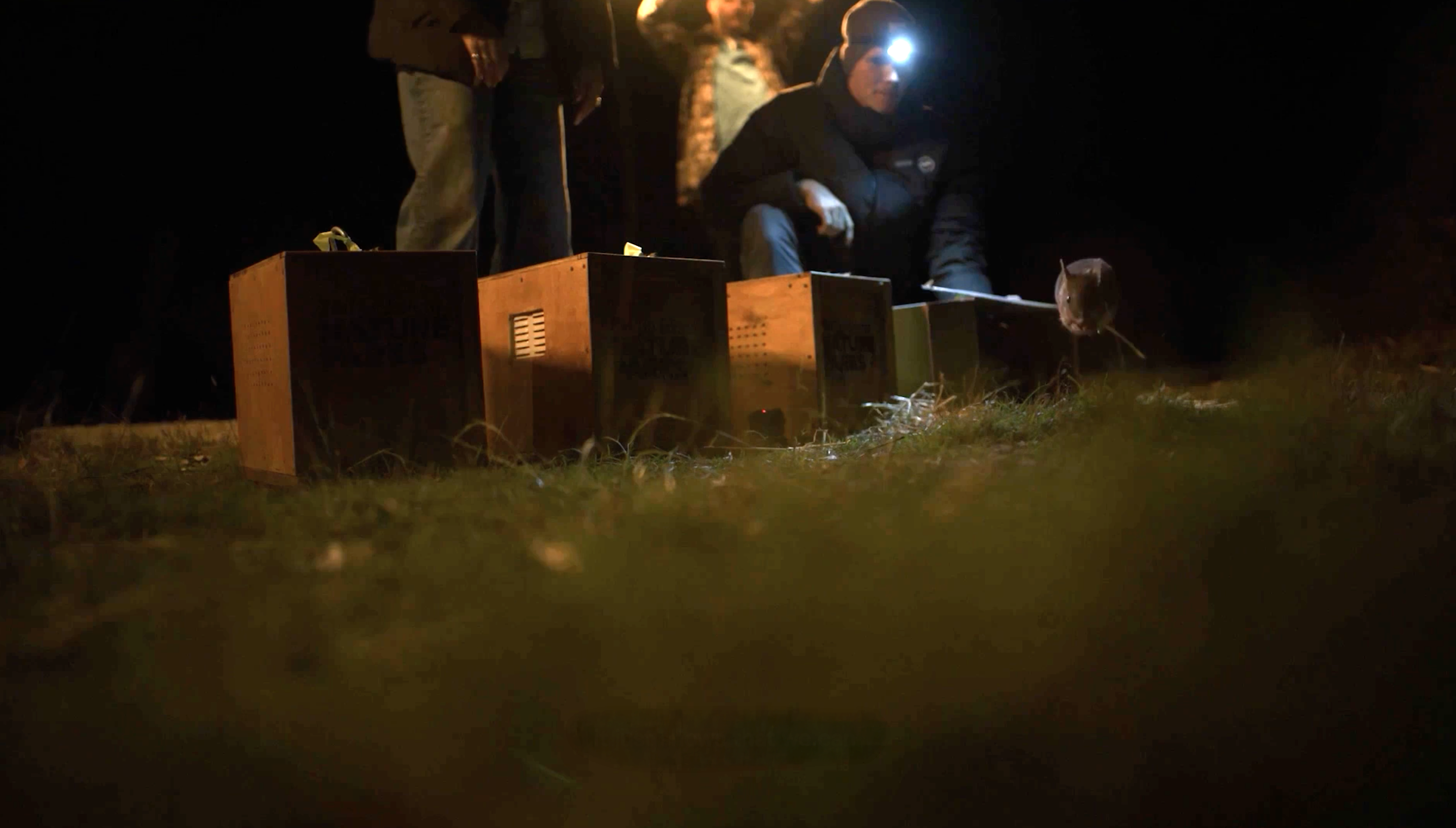
500-IN-5 SPECIES RECOVERY MODEL
500-in-5 explainer video
If you’d like to learn all about our 500-in-5 Species Recovery Model from the scientists who developed it and the team implementing it on the ground, this 3-minute video is for you.
Watch and learn!
500-in-5 Species Recovery Model
Odonata’s work is underpinned by its science-backed 500-in-5 Species Recovery Model (500-in-5), currently applied to our core species.
This model rebuilds populations up to at least 500 animals across a minimum of five different locations. This ensures they are fit, feisty, genetically healthy, and are geographically dispersed, creating insurance population in the face of increasing natural disasters.
In implementing 500-in-5 we continue to deepen our understanding of species recovery and genetic rescue, whilst uncovering the powerful ecosystem function these unique species play in achieving landscape regeneration.

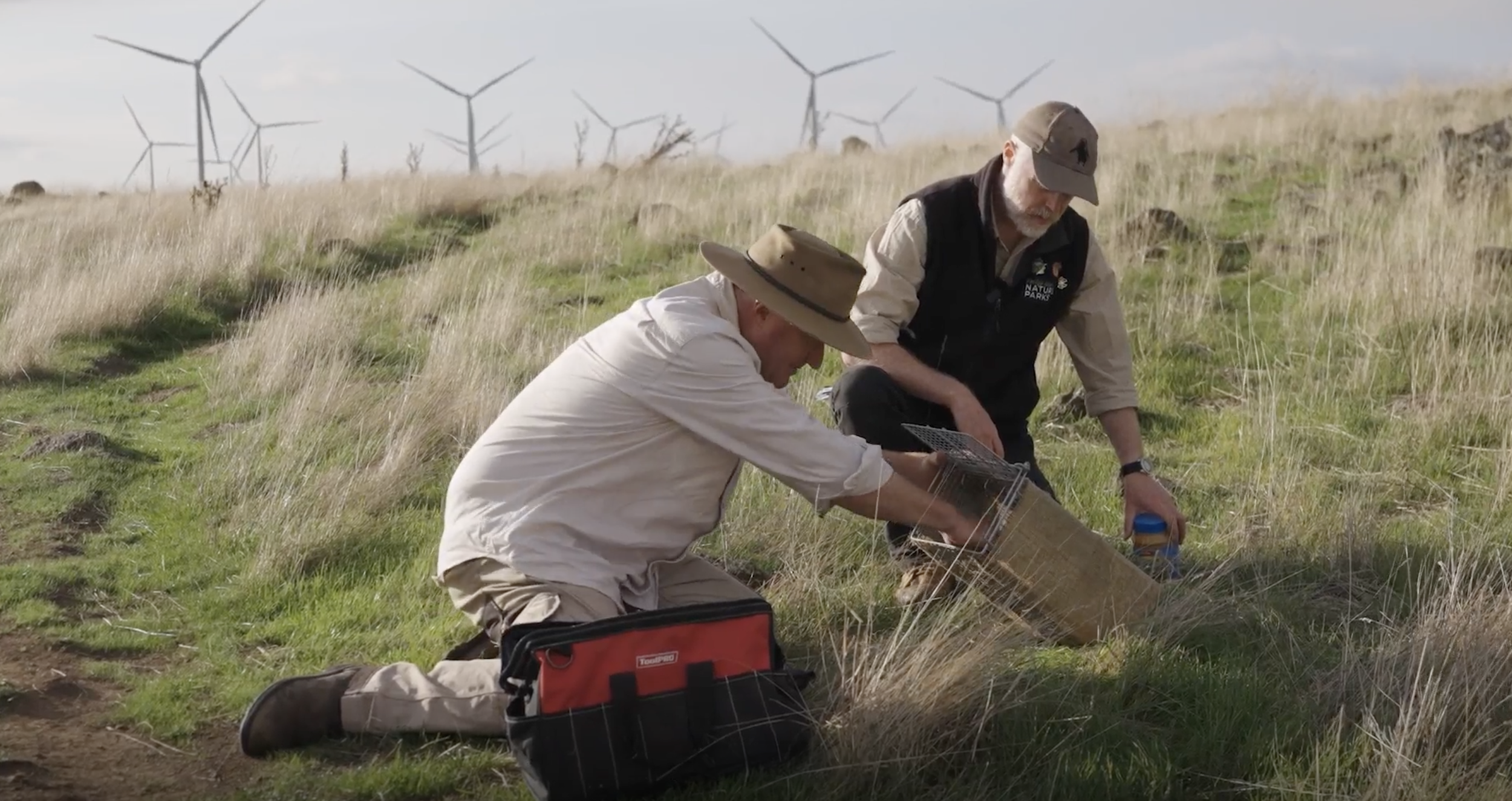
Science in action
If you’re keen to see our 500-in-5 Species Recovery Model in action, we have two cool case studies.
CASE STUDY
Southern brush-tailed rock-wallaby
With less than 100 southern brush-tailed rock-wallabies (SBTRW) left in the wild, Odonata and its Recovery Team partners are working hard to genetically recover the species, establish new colonies and return them to the wild.
Odonata has now supported the establishment of new colonies at Mt Rothwell Safe Haven, Barbaloot Conservation Reserve and Tidbinbilla Nature Reserve and has supplemented the fragmented wild colony at Little River Gorge, with plans for future wild releases into Gariwerd – Grampians National Park.
Here’s what we’ve achieved to date...
A two-minute overview of our future plans
After working to recover the species over the past decade, we are ready to dream big, with plans to return the southern brush-tailed rock-wallaby to wild sites over the next five years.
Wallabies take flight to Tidbinbilla Nature Reserve
On Friday 1st August 2025, six critically endangered southern brush-tailed rock-wallabies were flown from Odonata’s Mt Rothwell Sanctuary to Tidbinbilla Nature Reserve in Canberra, in a bid to save the species.
Welcome to Barbaloot little buddy!
Barbaloot is part of Odonata’s Sanctuary Network, located in the Strathbogie Ranges and is now home to a new colony of wallabies (39 in total). This population joins Mt Rothwell and Tidbinbilla as one of three secured safe-haven sites in the broader metapopulation strategy.
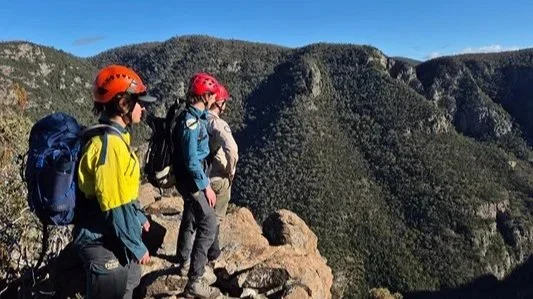
An ode to the southern brush-tailed rock-wallaby
2025 was an incredible year for Odonata and our partners. Three translocations were supported to improve the trajectory of the species.
Read to learn more about the historical context and current achievements.
CASE STUDY
Eastern barred bandicoot
Odonata has spent decades working alongside Eastern Barred Bandicoot Recovery Team to rebuild the mainland population of eastern barred bandicoots. This work was foundational to the downlisting of the eastern barred bandicoot from ‘extinct in the wild’ to ‘endangered’ (just the second time this has happened with a land-based mammal in Australia).
Odonata has now supported the establishment of populations at Mt Rothwell Safe Haven, Tiverton Farm Safe Haven and Phillip Island (Milawul), with future plans for Hamilton Parklands, French Island and Churchill Island.
Watch to learn more.
Once extinct on the mainland, bandicoots make a feisty return
In April 2026, Odonata and Recovery Team partners successfully moved 100 eastern barred bandicoots from our Tiverton Farm Safe Haven in western Victoria to Phillip Island (Milawul), where they have now begun a new life in a wild environment.
This is the largest movement of genetically recovered bandicoots in the history of this species’ recovery.
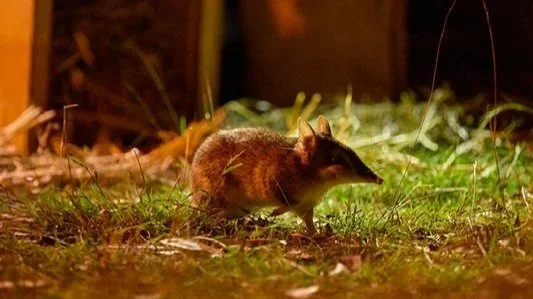
The Dirt | Bandicoot edition!
The recovery of the eastern barred bandcioot has been made possible thanks to the decades-long efforts of the Recovery Team and its members, with special thanks to Cesar Australia, Phillip Island Nature Parks, Zoos Victoria, Parks Victoria, the Department of Energy, Environment and Climate Action, Conservation Volunteers Australia, and the University of Melbourne.
These organisations have all contributed funding, time, expertise, and countless hours to the cause.
Academic paper
Odonata’s 500-in-5 Species Recovery Model is underpinned by:
Building evolutionary resilience: a framework for managing safe haven populations
Published August 2025
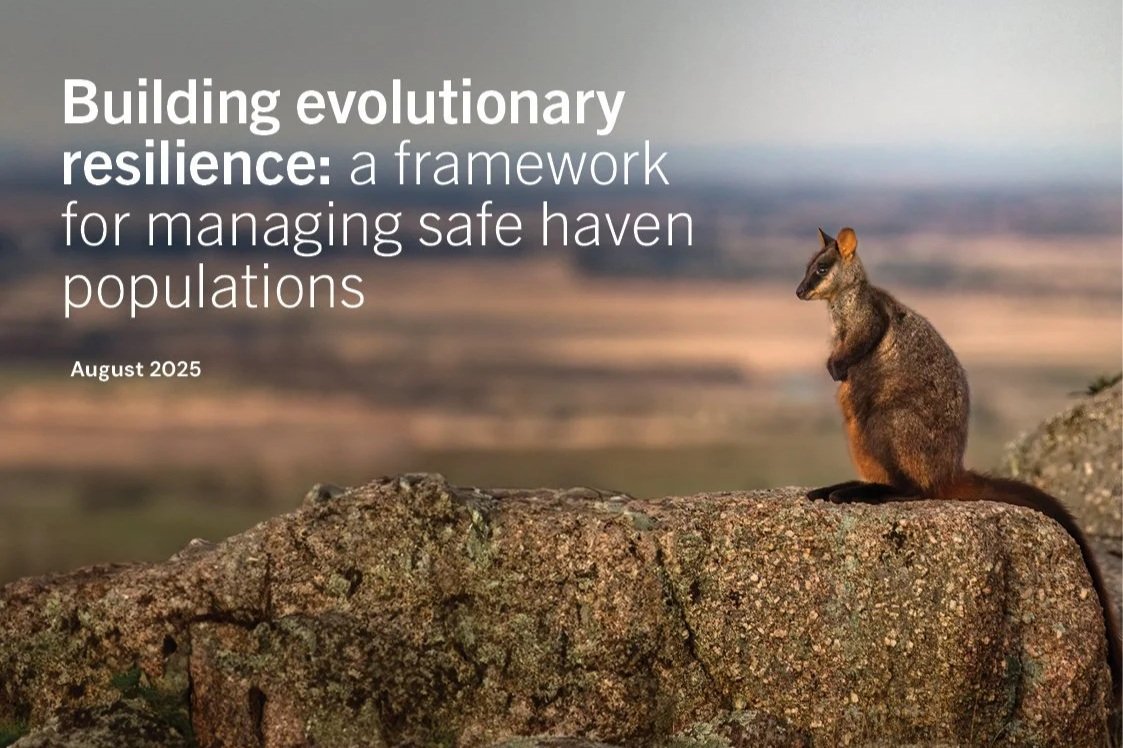
Photography by James D Morgan_Getty images for Amazon. Videography: Getty.Abstract
Safe havens are widely used to mitigate the impacts of invasive predators on threatened species, yet their isolation often disrupts evolutionary processes and can leave them vulnerable to environmental change and stochastic events. We present a framework for integrating evolutionary principles into safe haven management, termed 500-in-5, which establishes a metapopulation of >500 breeding individuals distributed across five geographically separated safe havens spanning environmental gradients. Using genetic and demographic simulations for two threatened Australian mammals, we demonstrate how this approach can enhance adaptive potential and persistence. Spatially explicit population models predict that many existing safe havens are at risk of collapse within decades. However, genetic simulations show that selection on standing genetic variation can drive fitness gains within tens of generations, improving population resilience to novel conditions. Integrating these processes reveals that safe haven networks can promote adaptation and resilience, substantially improving long-term persistence and providing robust sources for reintroductions.
Authors
Alex Slavenko, Cesar Australia
Collin W Ahrens, Cesar Australia
Adrian D Manning – Fenner School of Environment and Society, the Australian National University
Andrew R Weeks – Cesar Australia and School of BioSciences, The University of Melbourne